
Advertisement
Join us at B2B World Fest in Miami. November 9-10
October 7, 2026 | 6 min read
Listen to article 4 min
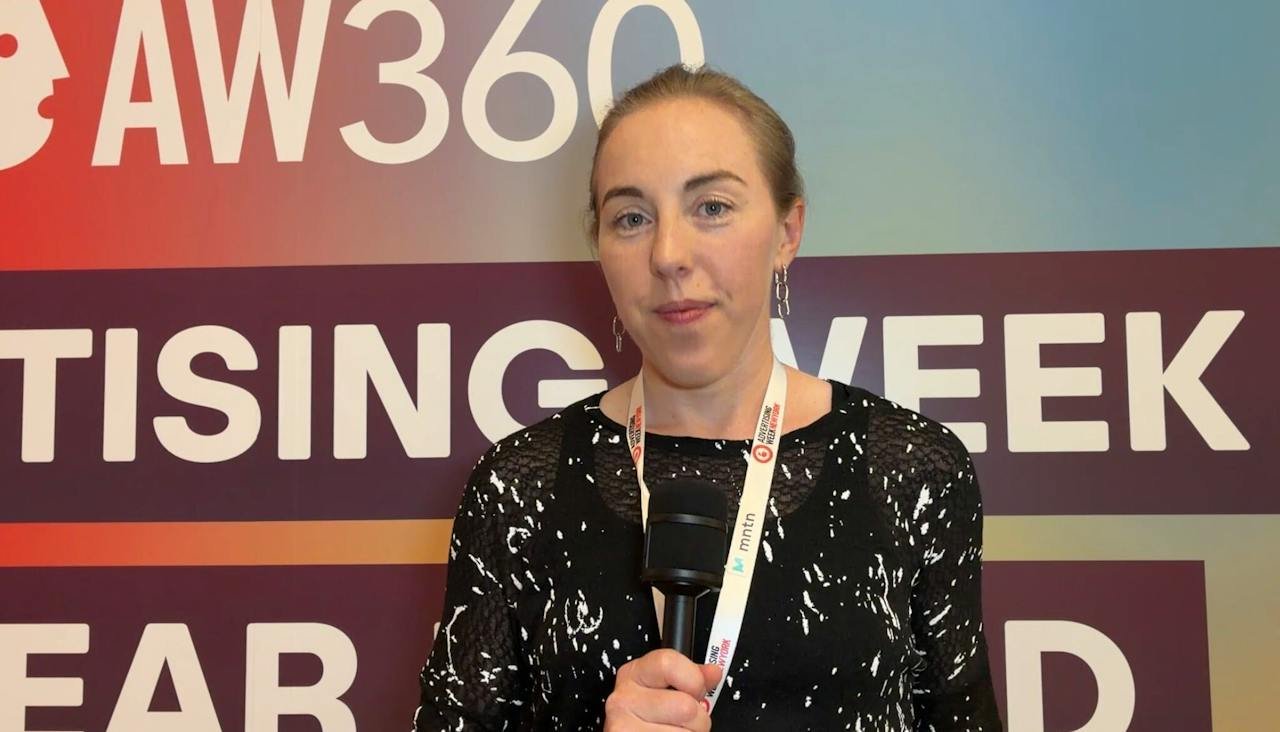
At Advertising Week, Julia Kolesnyk explains why experimentation, authenticity and leaving room for the unexpected are central to building a distinctive dating brand.
Julia Kolesnyk
Hily is taking a different approach to competing in the dating app market, where larger platforms can spend heavily to attract users. Instead of trying to match the reach or budgets of bigger competitors, the dating app is building its brand around experimentation, authenticity and a willingness to operate outside the usual category playbook.
That strategy was a central theme for Julia Kolesnyk, Hily’s head of brand and communications, during Advertising Week New York, where she appeared on a panel focused on how smaller brands can compete in an increasingly crowded market.
As Kolesnyk later told The Drum, Hily has to find other ways to get people’s attention. “You have to allow yourself to do some creative, stupid stuff,” she said. “Some of your stuff is going to be stupid, but you still have to do that.”
That willingness to experiment has become particularly important for Hily as it works to establish a clearer identity in dating. Kolesnyk joined the company in 2023 after previously working on its brand positioning from the agency side. She was then given the opportunity to take that work further from inside the business.
Hily launched in 2017, but Kolesnyk described its early identity as somewhat broad as the company tested different ideas. Her role has been part of an effort to give the brand a more defined position and build a stronger connection with younger users.
The company is competing against a category that has a complicated relationship with its own customers. Hily’s research and customer interviews suggest many users arrive after trying larger dating apps and becoming frustrated with the experience. Kolesnyk said customers frequently describe being tired of highly polished profiles, filters and the pressure to present an idealized version of themselves.
That feedback has helped shape Hily’s positioning around authenticity. The brand encourages users to stop pretending and be themselves, giving it a way to distinguish itself from competitors without trying to copy their marketing.
The strategy also affects how Hily plans its marketing. Kolesnyk said the company works in yearly planning cycles, but leaves considerable room to respond to unexpected opportunities and changes in the market.
“I’m happy if I plan 75% of what’s going to happen,” Kolesnyk said. “And 25% is going to be completely contextual, random stuff because you never know what’s going to be there.”
That flexibility extends across Hily’s media mix. Social platforms remain important for the brand, alongside creator partnerships, YouTube and TikTok. But Kolesnyk said Hily increasingly treats its own branded content and creator collaborations as part of the same content strategy rather than separating them into distinct buckets.
She also sees creators as both media and creative partners, which helps explain why Hily works with a broad range of talent rather than focusing exclusively on creators with the largest audiences. Its mix includes paid creators, organic influencers and smaller creators whose content Hily can then support with paid media.
The brand is particularly interested in lifestyle creators across areas such as fashion, dance and sports. Some are single and can naturally speak about the dating experience, while others can recommend Hily to single friends or their audiences.
Hily is also putting significant weight and time behind YouTube, where Kolesnyk said campaigns and tests of new advertising products have produced measurable results. TikTok remains another major channel, while the brand has pulled back somewhat on Meta as the platform continues to change.
Advertisement
The data behind those decisions are important as Hily tries to understand where potential users are coming from and what motivates them to switch dating apps. Kolesnyk said Hily is often not the first dating app people try. Many users begin with larger services before looking for something that feels more authentic.
That creates a challenge for Hily, but also gives the brand a clear opportunity. Rather than trying to win through scale alone, it can position itself as an alternative for users who have already become dissatisfied with the established category.
Hily is also looking for ways to build awareness outside digital platforms. Kolesnyk said the brand would like to have a larger physical presence, but cannot afford to sponsor events at the scale of larger competitors.
“We cannot go heavy on events. We cannot sponsor 100 parties in New York for single people,” she told The Drum. “So we have to be creative.”
That push into the physical world is part of a broader effort to reduce Hily’s dependence on platforms it does not control. Kolesnyk said changes to Meta, TikTok and other platforms can quickly affect how brands reach customers, making organic awareness and direct demand increasingly valuable.
Advertisement
“If you build on rented land, you can lose any moment,” Kolesnyk said.
Hily still relies on those platforms, but its strategy is focused on building a brand that can survive changes to algorithms, advertising products and platform rules. For a smaller dating app, that means accepting that it cannot control the size of its competitors’ budgets and instead finding opportunities to make the brand more recognizable, more flexible and more willing to take risks.
That was also the message Kolesnyk brought to Advertising Week New York: smaller brands have to give themselves permission to experiment, particularly when there is no established formula for winning.
For Hily, the approach means using data and research to understand its audience, while leaving enough room for ideas that could not have been planned months in advance.
Hily can’t outspend dating giants, so it’s allowing itself to try ‘creative, stupid stuff’ – The Drum
No comments yet
0 comments